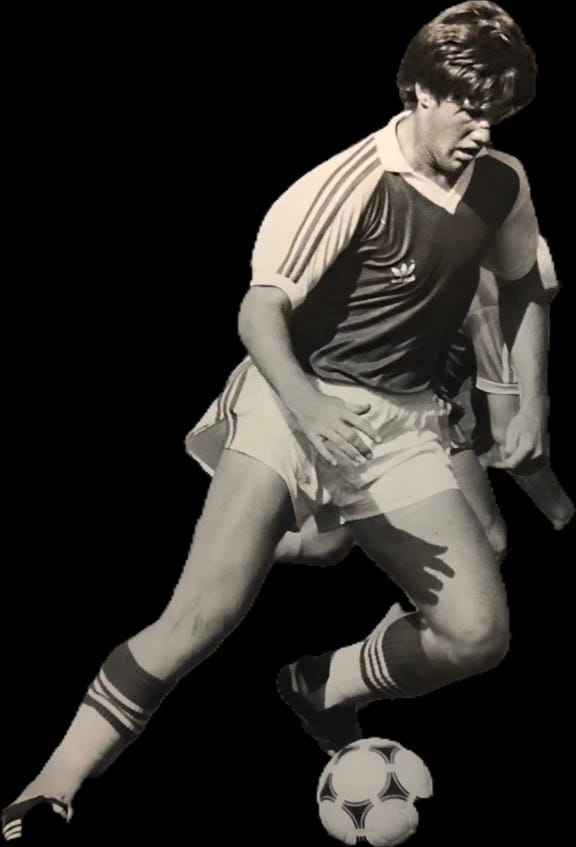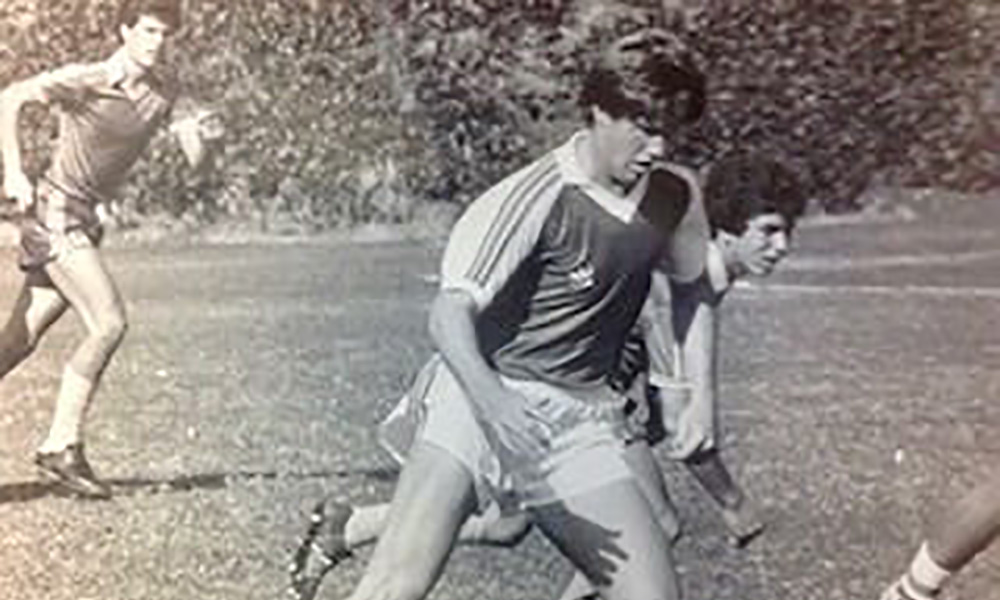
Every coach I ever had told me to keep my head up. Here I am, eyes locked on the ball. That pretty much explains why the pros never called.
Let me start with a confession that won’t surprise anyone who knows me. I spent the last few weeks yelling at my television, hugging my corgi, and occasionally wiping my eyes over a game I have no business being this emotional about.
And before I say anything nice, let me say the true thing first. FIFA, as an organization, is essentially unrivaled when it comes to greed and corruption. That’s not a hot take. That’s just the scoreboard. What makes it worse, genuinely worse, is that FIFA holds hostage this beautiful thing that billions of people around the globe love. They didn’t build the beauty. They just own the gate and charge admission to our joy.
So. That’s on the record.
And yet.
This tournament has been spectacular. I mean it. Some of these characters and storylines were the kind of thing you couldn’t sell to a studio because they’d tell you it was too much. The ascendance of Cape Verde, a nation you could fit in a corner of Los Angeles, walking onto the biggest stage in sports. Erling Haaland and all of Norway leaning into their Viking heritage, minus the plundering. Messi, at 39 years old, somehow dragging Argentina to the final by sheer will and muscle memory. Lamine Yamal, at nineteen, somehow dragging Spain to that same final. The best strikers on earth elbowing each other for the Golden Boot like kids fighting over the last slice.
Almost every game was riveting. And America’s run was mesmerizing. That last game against Belgium broke my heart in the specific way only sports can, the way that feels completely disproportionate and completely real at the same time. Luckily, a lifetime of L.A. Clippers fandom prepared me for exactly this kind of grief. I’ve been in training for heartbreak since before some of these players were born.
But here’s what stayed with me after the final whistle.
My own World Cup, my first real one, started at the very beginning, and it started with Iran. From the moment they walked onto the field, I found myself rooting for them. Not for any complicated reason, and not in spite of everything happening in the world. Because of it. An American, in a tournament played partly on American soil, in a year like this one, quietly pulling for Iran. The world needed that. And I felt it in my chest before I could explain it. That was the moment I was in, all the way in.
Because that’s the thing. For weeks, every single day, we watched people from different continents gather joyfully in the same place. Different languages. Different religions. Different colors of skin. Countries with real, serious, ugly history between them, and their fans standing shoulder to shoulder, painted up, screaming, crying, hugging strangers over a ball crossing a line. Something born out of cynicism and avarice still managed to produce moments of genuine human beauty.
I’m not defending the cynicism. I’m not laundering the avarice. I’m just telling you what I saw.
And I’ll tell you something else the final settled for me. For most of my life, one thing genuinely bugged me about soccer: the best team didn’t always win. A whole tournament could come down to penalty kicks, a coin flip in cleats, and the better side would go home wondering what the hell just happened. This time, the better side won. And here’s my confession. I ached to watch Messi ride off into the sunset on some impossible, storybook note. One last miracle at 39, the ending they’d write a movie about. But Spain deserved it. Yamal and that team were the best on the grass, and they got exactly what they earned. It was fitting. It was even, in its own way, a kind of justice. The fairy tale I wanted lost to the ending that was true. And I’ve been around long enough to know that’s usually the ending worth respecting.
Because life rarely hands us clean categories. And part of being an adult, maybe the hardest part, is understanding that you can love something complicated. A game. A spouse. A parent. A country celebrating its 250th birthday. You don’t have to pretend the ugly parts aren’t there. But you do have to accept that a lot of the joy in this life arrives tangled up in systems we would never have designed and couldn’t fully defend if you put us on the stand.
I’ve lived long enough to know that almost nothing is entirely good or entirely bad. The people I’ve loved most were not simple. The best careers I’ve helped build were not straight lines. My own story sure as hell isn’t a clean category. Life is gradations, subtle ones, all the way down.
And that, to me, is exactly why storytelling matters, why real narrative journalism matters. A chart can’t hold a contradiction. A bullet point can’t show you FIFA taking a cut while a kid from Cape Verde weeps into his national flag. Only a story can carry both of those truths in the same hand and make you feel the weight of them. Stories shine a light on the parts of reality most of us would never otherwise see, let alone understand.
So no, I won’t tell you it was all beautiful, and I won’t tell you it was all rotten. It was both. It usually is.
Love the complicated thing. Just don’t lie to yourself about what you’re loving.