I got fired from InterTalent. But I could always get into Helena’s.
In Hollywood at the time, I’m not sure which was the greater accomplishment.
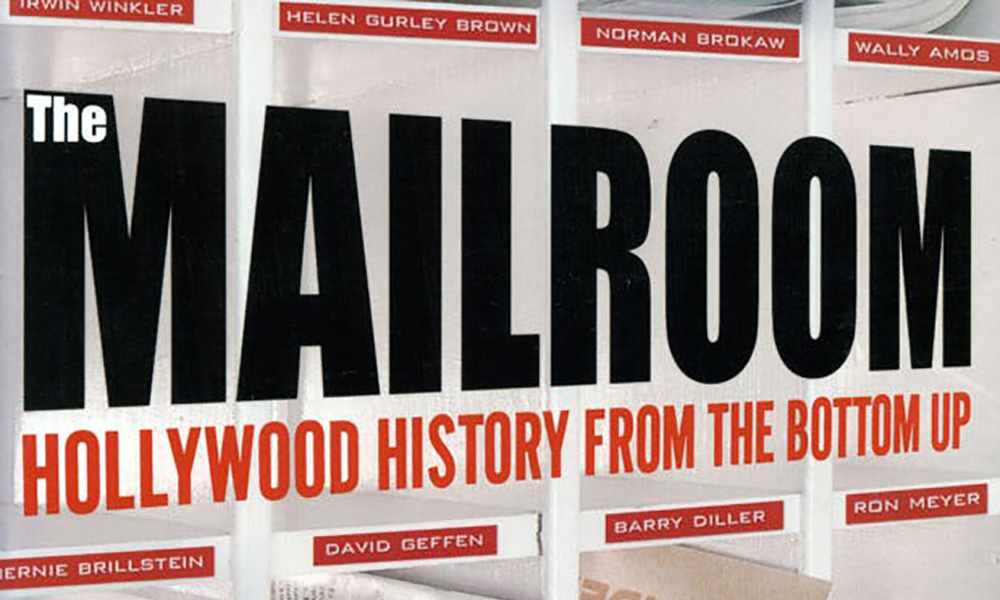
Reading Ari Emanuel’s book got me thinking about that chapter of my life. InterTalent during the week. Helena’s on the weekends. Two places I don’t hear people talk about much anymore, although apparently I still have plenty to say about both.
InterTalent lasted roughly four years. Look at the people who came through it: Ari Emanuel, Patrick Whitesell, Kevin Misher, Bill Block, Judy Hofflund, David Greenblatt.
All that ambition, ability and personality in one agency.
To me, it felt like the next powerhouse.
I was Judy’s assistant.
Kevin Misher and I had started together in the ICM mailroom. Our brothers-in-arms chapter.

Kevin got fired from ICM. I quit. We both went to InterTalent.
Then I got fired from InterTalent. Kevin quit and went to work for my father at TriStar, before eventually going on to run Universal.
We had the quitting and getting fired covered between us.
Kevin remains my best friend to this day. I was fortunate enough to be the best man at his wedding. That friendship has lasted a good deal longer than either of our agency careers.
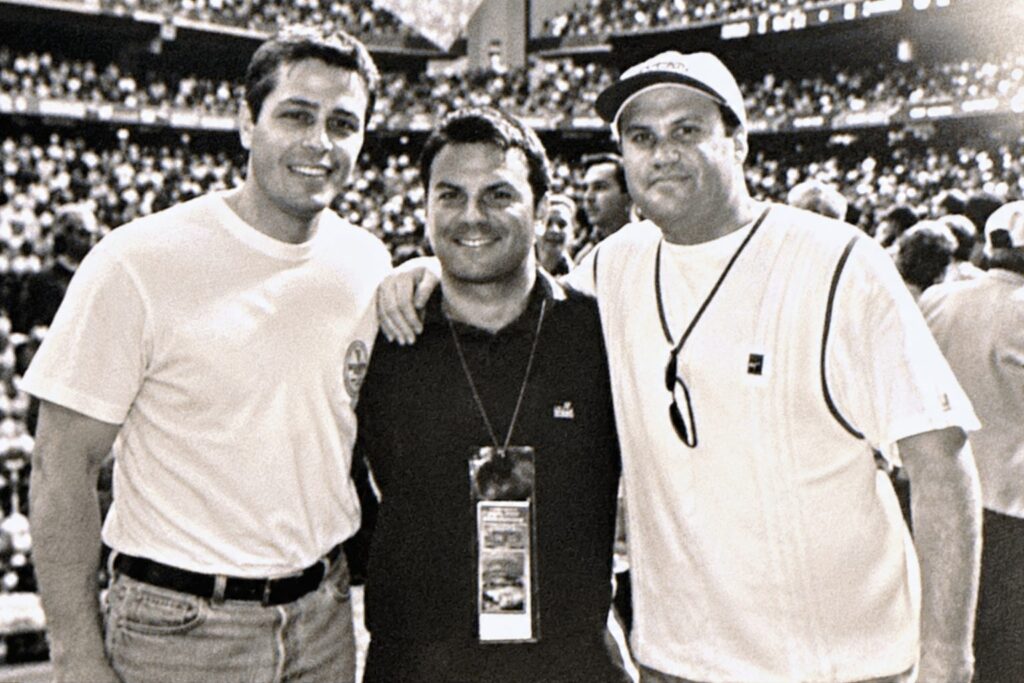
And Patrick Whitesell—what a mensch. We’ve remained good friends through all the years and all the changes. Looking at that photo of the three of us at the Final Four, I’m reminded how fortunate I am that those friendships are still part of my life.
What I remember about InterTalent is the daily life of the place. Passing around buck slips. Spending a weekend cleaning up the script library. The work that felt enormously important when you were doing it, even if explaining it to someone outside the business made it sound like you mostly moved paper.
There was a lot to learn while moving that paper.
Judy Hofflund was one of the best agents—and one of the best representatives of people—I have ever known.
She knew how to make someone comfortable. She could adjust to the personality in front of her. She knew exactly what to say and when to say it.
That sounds simple until you try to do it all day with people who each need something different from you.
Some need reassurance. Some want you to get to the point. Sometimes the most useful thing you can do is listen long enough to understand what someone is actually asking.
Watching Judy, I learned how much of representation happens in those decisions.
And her follow-up was impeccable. Whatever care she brought to a conversation, she carried into the work afterward.
Old school meets new school. She understood people, and she followed through. I got to watch that from her desk.
Bill Block gave me a different kind of education.
They were asking me to do a lot of script coverage. I found a way to get coverage from another source and retype it.
I’m not submitting this as advice for today’s assistants. I’m telling you what happened.
One day Bill walked into my office.
“Are you retyping our coverages that we’re asking you to do from somewhere else?”
“Yes.”
“Awesome. Great work.”
That was the conversation.
I still laugh thinking about it. I’m not sure it belongs in an employee handbook, but it belongs in any honest account of my time there.
Then there was the holiday weight-loss contest.
We all had to lose fifteen pounds over Thanksgiving and Christmas. If we didn’t, we had to jump into the koi pond naked.
Someone apparently looked at the two holidays most associated with eating and decided this was the appropriate time to introduce public nudity as a consequence.
These are the things that come back to you. The work, the people, the absurdity. An office becomes its own little world, and for a while you live inside it without thinking much about how you’ll remember it later.
On the weekends, I went to Helena’s.
Every weekend.
Getting in was no small accomplishment. Helena liked me for some reason, and I was always let in. I can’t offer a better explanation than that. Whatever her criteria were, I apparently met them.
My employment prospects might have been uncertain. My weekend plans were solid.
I can still see Kevin’s face as I dove through the air to do the worm on the dance floor. Prince, Rod Stewart, a who’s who of Hollywood around us—and there I was, making my own contribution to the evening’s entertainment.
Some memories you share with a friend. Others you make him witness.
Helena’s was enormous in reputation. In my memory, the place itself was about the size of a high-end watch shop in Beverly Hills. Except we were over on Rampart.
All those people, all that energy, in that little space. And somehow, I had decided there was room for the worm.
Back then, we were living our lives. Working, going out, trying to figure out the business and our place in it. Getting fired occasionally.
Looking back, I’m struck by how much was beginning around us.
People at InterTalent would go on to build companies, run studios, produce films and shape careers. The agency brought them together for a short stretch, before their lives carried them into everything that followed.
Four years.
How much of a company survives through the people who leave it?
Those years left me with friendships and lessons I’ve carried through decades in this business.
I don’t want to turn any of this into a perfect past. I’ve already admitted to borrowing the coverage, getting fired and doing the worm in front of Prince.
But as I was writing this, I found myself smiling.
InterTalent and Helena’s are gone. I can still see Bill standing in my doorway, Helena letting me through hers, and Kevin’s face as I launched myself across that dance floor.
Do I have to forget them?
I think I’ll carry them with me.